| Temperature | 26–30 °C (79–86 °F) |
|---|---|
| pH | 5.5–7.0 |
| Min tank | 20 gal (76 L) |
| Adult size | 8 cm |
| Lifespan | 3–4 years |
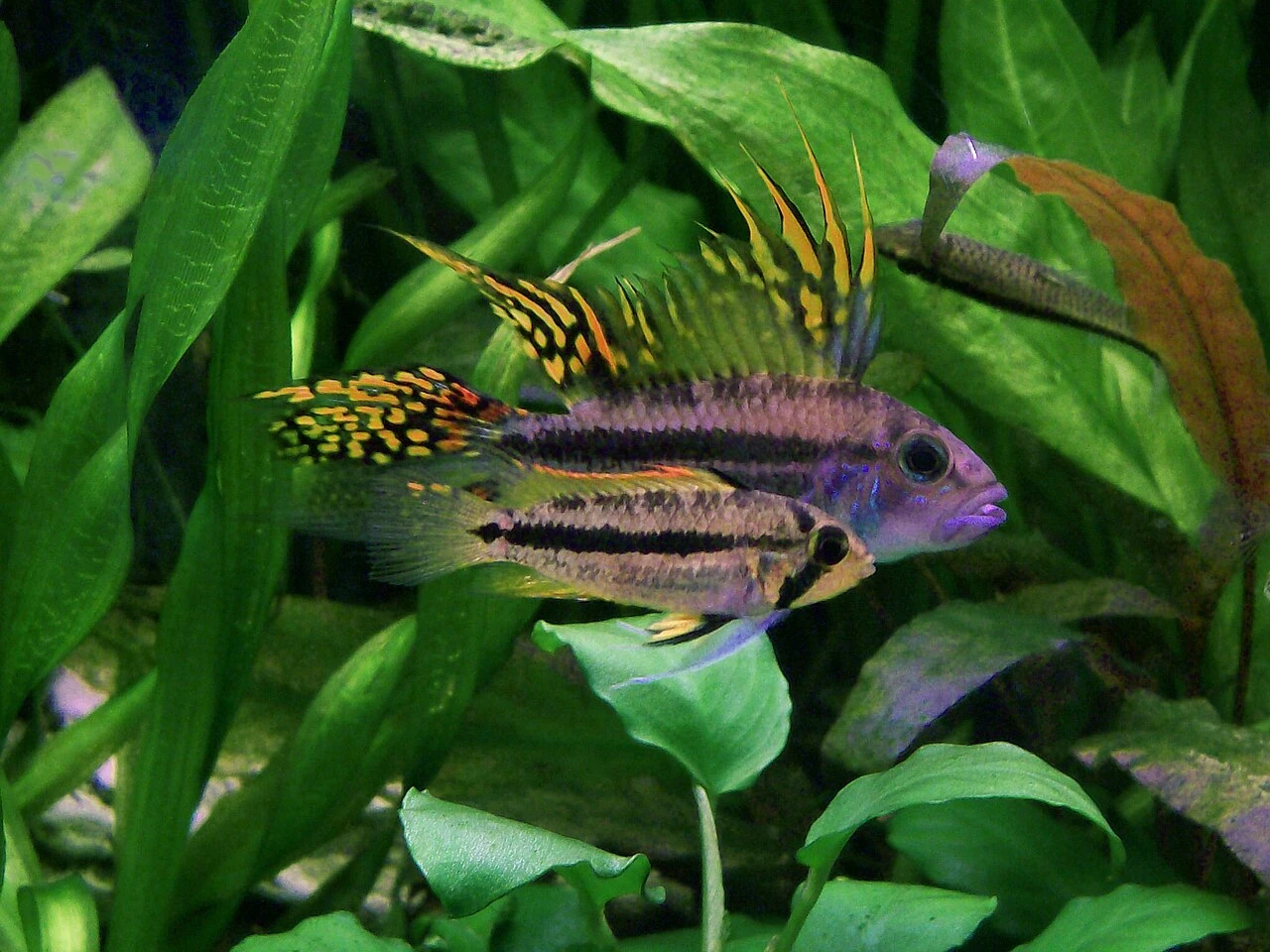
A German blue ram is one of those animals that looks simple in the shop bag and turns out to have opinions once it is home. The Mikrogeophagus ramirezi German blue ram is a long-time favourite for a reason, but it has specific needs that generic "community fish" advice misses.
At a glance
| Minimum tank | 20 gallons (76 L) |
|---|---|
| Temperature | 26 to 30 °C |
| pH range | 5.5 to 7.0 |
| Adult size | 6 to 8 cm |
| Lifespan | 3 to 4 years |
| Group size | solitary |
Where it comes from
In the wild the German blue ram lives in slow, vegetated waters where cover is everywhere and currents stay gentle. Recreating that means planting densely, keeping the filter flow soft, and avoiding bright, open tanks that leave the fish exposed. Stable water matters more than perfect parameters.
Tank setup
Start with at least 20 gallons and a mature, cycled filter — see our anubias nana with co2 guide before you buy. A sand or fine gravel substrate, a few driftwood branches and a carpet or mid-ground plant mass give the fish somewhere to retreat. Keep nitrates under 20 ppm with a weekly 29% water change.
Feeding
Feed a varied diet: a quality flake or micro-pellet as the base, topped up with frozen or live foods two or three times a week. Offer only what the fish clears in about 1 minutes, once or twice daily. Overfeeding is the single most common cause of water-quality swings.
A mistake everyone makes
Adding a German blue ram to a brand-new tank is the classic error. An uncycled tank spikes ammonia to 0.1 ppm within days and the fish pays for it. Cycle first, stock lightly, and let the group size build up gradually.
Good tank mates
Peaceful, similar-sized neighbours work best. Avoid fin-nippers and anything large enough to swallow the German blue ram. A planted community with a solid best sponge filter guide: quiet, safe and shrimp-proof in the mix tends to settle quickly.
Reading the numbers
Target 26 to 30 °C and a pH near 5.5 to 7.0; ammonia and nitrite must read 0 ppm and nitrates stay under 20 ppm. Test weekly and do a 21% water change so the German blue ram never rides a parameter swing.